
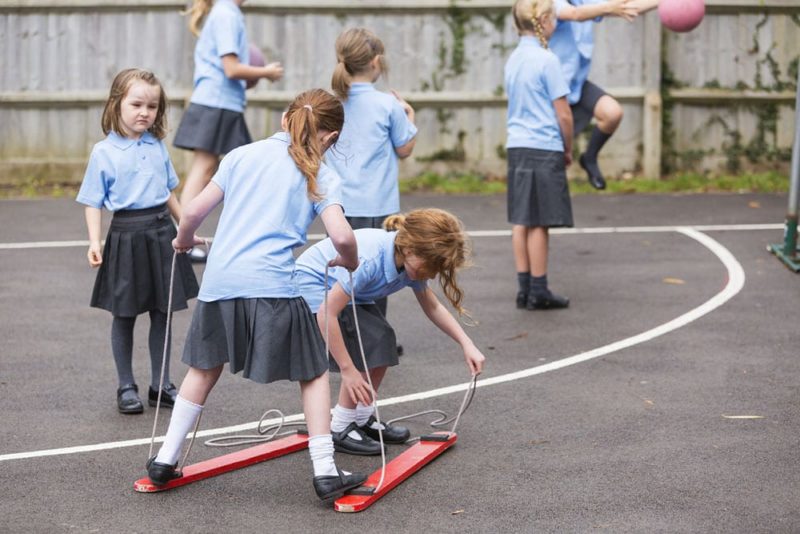
At Occupational Therapy Helping Children, we conduct treatment in a number of settings. These include our private clinics, the school setting and occasionally in the client’s own home. There are pros and cons for each environment, and today’s blog post will be focused on the school environment.
It is becoming more and more common for schools to offer Occupational Therapy services within the school setting. Occupational Therapy Helping Children services a number of schools on Sydney’s Northern Beaches and North Shore and we assist children from pre-school age, right up to the teenagers who are sitting their HSC. Therapy services are not included as part of school fees, but are paid for by the clients.
School-based therapy has many positive attributes, but as with any service it has its restrictions. Figuring out which type of service suits your child is an important aspect to consider if you are beginning therapy. It is essential to remember that what suits one child may not suit another.
There are many positive aspects of school-based therapy. In this day and age families are busier than ever, leaving limited time after school to fit in sports, homework and other extra-curricular activities. Scheduling weekly therapy amongst these ventures takes amazing time-management skills, and lots of patience. Having your child attend school-based therapy eliminates this problem! Your therapist will arrange with the class teacher to find a suitable time to conduct the lesson, without missing any crucial learning sessions. This then leaves more time afterschool for family time and other activities!
Being a school-based therapist is extremely rewarding. We are given the opportunity to observe first-hand what areas the children are having difficulty with, as well as discuss their goals with class teachers on a regular basis. There is no better feeling than seeing a child apply their therapy into the classroom, whether it is with their self-regulation, handwriting or social skills. Handwriting and fine-motor skills are the main areas that are worked on in school therapy, and it allows the therapist to “check-up” on the child’s progress first hand!
School based therapy is not for everyone. Our clinics are full of amazing therapy-equipment to assist with a wide range of difficulties, but the school classroom does not have this luxury! For example, it is much easier to assist children with sensory processing difficulties in our clinic where there is room to move and specific equipment at our disposal.
Although school based therapy reduces the face-to-face contact that therapists have with parents, we have found simple ways to combat this problem. All Occupational Therapy Helping Children therapists have a work email address and phone numbers that parents are encouraged to contact us on. Each child receives a folder to keep their work in, and it houses a weekly-updated communication sheet so that parents are kept informed about their child’s progress.
No matter what therapy setting suits your child, it is essential that they enjoy the experience and are pushed to improve their skills.

