
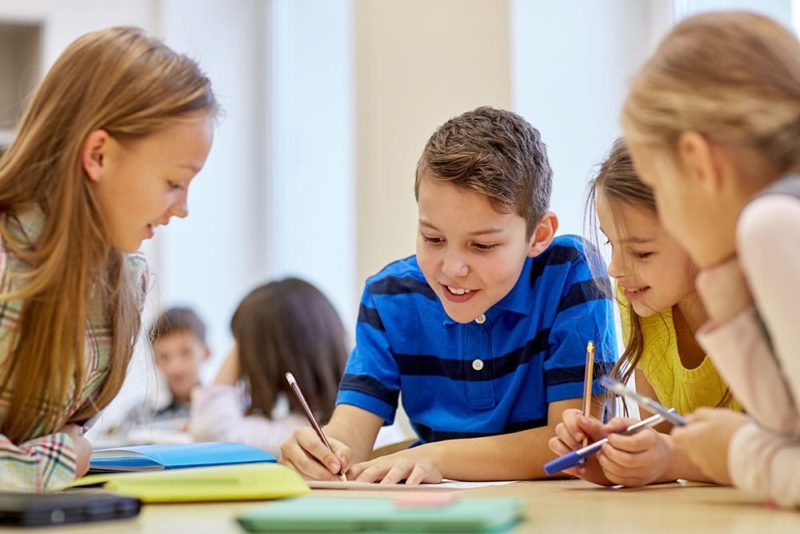
As occupational therapists, teachers and parents often approach us about their children’s awkward pencil grasp. Left unaddressed, pencil grip problems can end up affecting a child’s academic performance at school. And when children can see they’re not keeping up, it can lead to anxiety, frustration and low self-esteem, which can see them fall further behind.
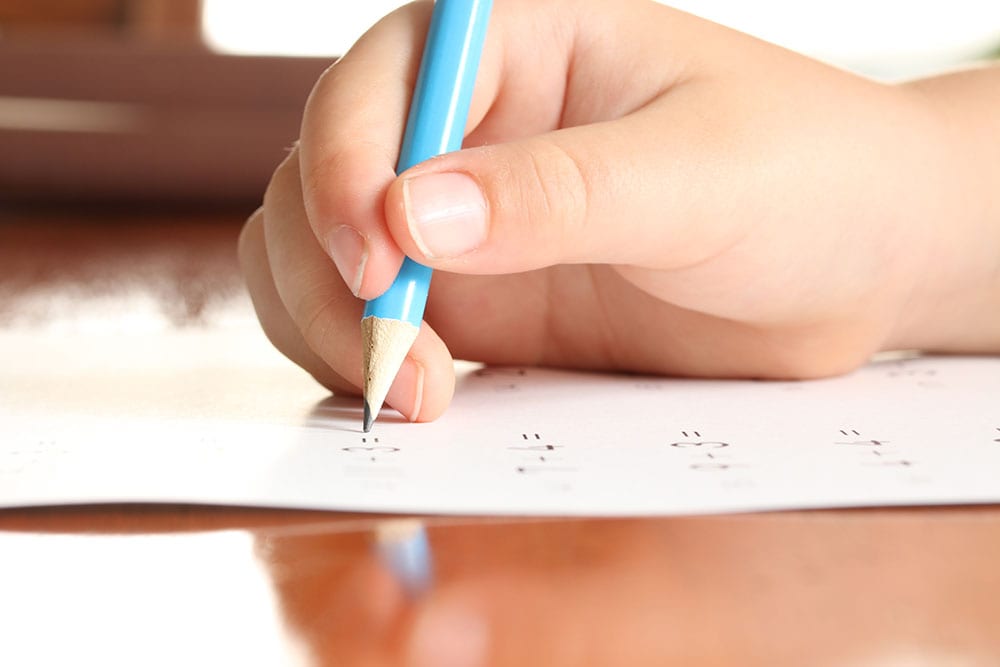
The most efficient way to hold a pencil is the dynamic tripod grasp (similar to that in the image below) where the pencil is positioned between the thumb and index finger with the pencil resting on the middle finger. Another option is the quadrupod grasp, where the pencil is positioned between the thumb, index and middle fingers, the fourth finger stabilises the pencil and the fifth finger is curled in towards the palm.
If your child isn’t using one of these pencil grips yet, fine motor activities can help them develop the skills they need to hold their pencil functionally, and write more easily.
Fine Motor Strength
Kids need strong hands and fingers for a whole range of day-to-day activities for school and play. Having strong wrists, hands and fingers helps children hold their pencil functionally, as well as helping them write with endurance and fluency.
Some great exercises to help build your child’s fine motor strength include:
Paper Crumpling: Have your child crumple up sheets of newspaper or scrap paper into the smallest, tightest ball possible. Increase the challenge by only letting them use one hand to crumple the paper.
CRAFT IDEA: Crumple small pieces of crepe or tissue paper into balls to decorate craft projects, like we do at our holiday groups!
Tape Races: Get your child to tear off lots of pieces of masking tape and place them down on a flat surface (e.g. a table or the floor). Then have a race to see how many they can peel off in one minute!
CRAFT IDEAS:
- Use the strips of tape to make an artwork
- Write your child’s name and then they can cover the lines of the letters using small pieces of tape
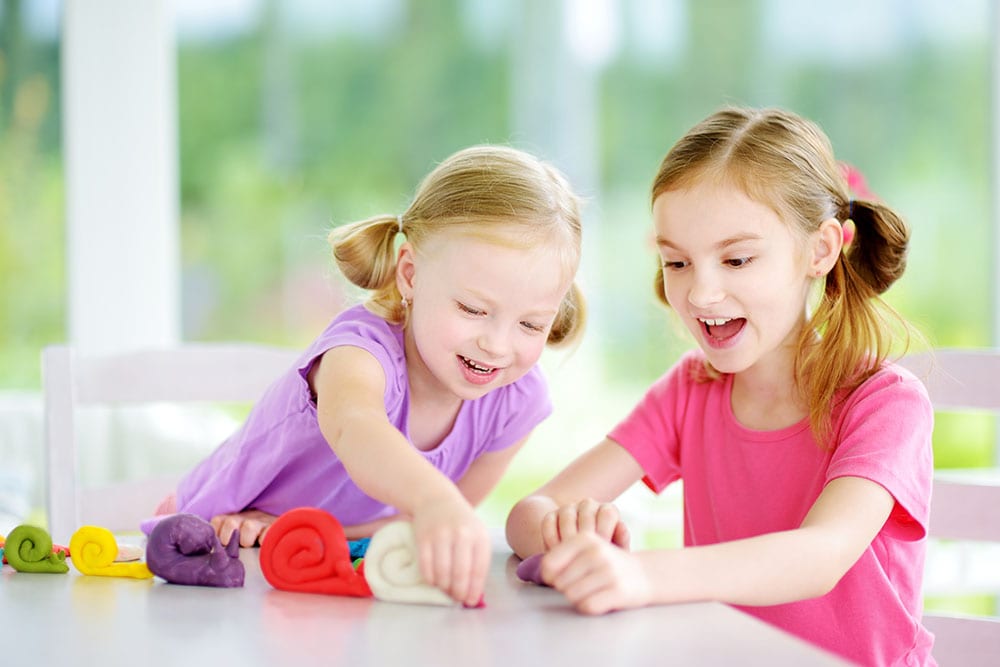
Play-Doh and Theraputty Exercises: These games are always popular with kids!
- Make a spider or octopus by having your child first roll the putty into a ball, flatten it down, and then pinch out eight legs using their pincer fingers (thumb and index finger)
- Make spaghetti by having them pull off small pieces of Play-Doh and roll them into long ‘noodles’
- Play a guessing game, where your child makes something using the putty and you or another child has to guess what it is!
Pegs: Pinching and squeezing clips, pegs, tweezers, or even tongs helps build hand muscle strength.
- Have your child use pegs to pick up pom poms and move them into a bucket or sort them into groups by colour or size. Have a race to see who can do it the quickest!
- Make a caterpillar! Cut out the shape of a caterpillar’s body and draw a face on one end. Have your kid clip pegs to the body as the caterpillar’s legs.
Separation of the Two Sides of the Hand
Did you know our hands can be separated into two sides? The precision side (thumb, index finger, and middle finger) and the power side of your hand (fourth and fifth fingers). Being able to use the two sides separately is important for moving and using objects like pencils, cutlery and scissors.
We are best able to control the ‘precision’ side when our ‘power’ side is stable (curled up into our palm or extended away from the other fingers). In handwriting, this allows for fluency and control, which ultimately promotes neat handwriting.
Activity: To assist your child with this, you can encourage them to hold something (like a piece of LEGO, ball of Play-Doh or cotton wool, an eraser, button or coin) with their fourth and fifth fingers, while using their precision side by doing one of the following:
- Flipping coins
- Playing Connect Four or Battleship
- Creating shapes or pictures using pipe cleaners or wikki sticks
- Rolling Play-Doh into small balls
- Squeezing a spray bottle with the pointer and middle fingers
- Placing coins into a piggy bank
- Holding a cotton ball in the palm with the ring and middle fingers while colouring, writing, or cutting
Open Thumb Web Space
The thumb web space is between your thumb and index finger (it makes an “O” when you make the “OK” sign). An open thumb web space is necessary for tasks requiring in-hand manipulation, such as moving coins from the palm to the fingertips or picking up a pencil. If the thumb is squashed up against the index finger, it makes it hard to move items. Writing with a closed web space often causes poor and slow handwriting, especially as kids are expected to write at faster speeds the older they get.
Activities: These activities can help open your child’s thumb web space:
- Roll Play-Doh into small balls using the pads of the thumb and index finger
- Pop bubble wrap (this can be fun to join in too!)
- Thread plastic beads onto a string, place cereal O’s onto toothpicks, or stringing straws onto yarn
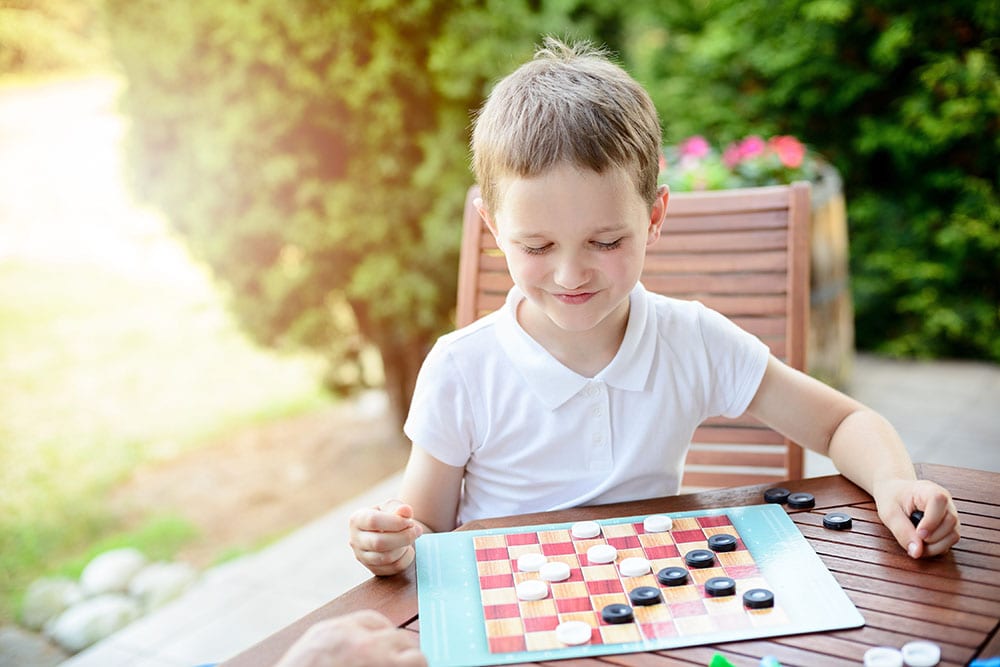
- Play games like checkers where children have to grasp small disc-like pieces with a pincer grasp between their thumb and the pad of their index finger
- Origami: There are loads of origami set books out there with different levels of difficulty
In-Hand Manipulation
In-hand manipulation is the ability to move small objects around in your hand without using the other hand to help. This is, perhaps, the most complex fine motor skill as it involves three components:
1. Translation: Using your fingers to move or ‘squirrel’ a small item from your palm to your fingertips. (E.g. When you hold a coin in your palm and move it to your fingertips to push it into a piggy bank or vending machine).
2. Shift: Moving an object using the pads of your fingers. (E.g. Adjusting your pencil grip, or manipulating a button or a zipper with the fingertips).
3. Rotation: Rolling an object using your fingertips. (E.g. Rolling a pencil in your fingertips, turning a pencil over to use the rubber, or opening a bottle top by rotating the lid between your fingertips.)
If your child has difficulty with in-hand manipulation, they may use both hands for activities that would usually only require one or they may need to unnecessarily stabilise an object against their body to get the job done.
You can try these actives to improve your child’s in-hand manipulation, which will ultimately encourage use of a functional pencil grasp:
Pencil Games:
- Hold the pencil in the fingertips, ready for writing, then “walk” the fingers to the eraser end of the pencil, then back to the tip
- Turn the pencil between the thumb and fingertips: try turning it like a windmill in one direction, then the other
- Practice flipping the pencil from eraser end to tip end
Extra Help
It’s important to try to improve a child’s pencil grasp earlier, rather than later because the older they get, the harder it will be to break their poor habits! These activities are a more effective (and fun!) way to help your little one develop a functional pencil grasp than just pencil to paper practice.
Our advice is to have a break from the iPad and screens, and to play with as many toys/utensils as they can get their hands on… Let them explore (with some guidance in the four areas above) and they will ultimately help themselves to produce controlled, legible handwriting!
If your child needs some extra assistance with their handwriting, please contact us or talk to your child’s Occupational Therapist directly. They can also come along to our upcoming holiday groups (for Years K-2) — find out more here.

